Long term investing commonly requires long term thinking. With this in mind we would like to look at investments in China, Chinese companies and their stocks in particular. China began to open up to the world when President Nixon visited China in 1972 but it was in late 1978 under then Premier Deng Xiaoping that China began to allow private Chinese businesses, decollectivized agriculture and allowed foreign investment in China.
China Takes Advantage of Foreign Direct Investment
In the earliest days when China opened up to the world many European and American firms rushed to take advantage of cheap and plentiful Chinese labor combined with Japanese management principles to produce their products much more cheaply than at home and then export those products across the world and even back home for less than if they had simply manufactured and distributed in their home countries. As soon as foreigners started manufacturing in China they brought their expertise as well as taught what were essentially trade secrets to their Chinese workers. The next step in this process was that Chinese companies were formed that were able to manufacture goods of equal quality to their American or European counterparts for less thus cutting into or even erasing the profits of the original foreign direct investments.
China Joins the World Trade Organization
After more than a decade of negotiations China joined to World Trade Organization in 2001. Although China complied partially with WTO rules critics say they have not complied totally to the detriment of trading partners across the globe. From 2001 to 2023 China’s total trade (imports plus exports) grew from about $500 billion to more than $500 trillion making China the dominant manufacturer in the world. Today there are Chinese companies with market capitalizations in the hundreds of billions. These include Tencent Holdings (TCEHY), Commercial Bank of China (IDCBY), and Agricultural Bank of China (ACGBY). There are hundreds of other Chinese stocks which, like the three mentioned, can be traded as American Depositary Receipts on the New York Stock Exchange. Considering the Chinese dominance in manufacturing and increasing global clout should you be investing in these companies? Or should you be considering the risks of investing in China?
Chinese Real Estate Market Collapse as an Investment Risk
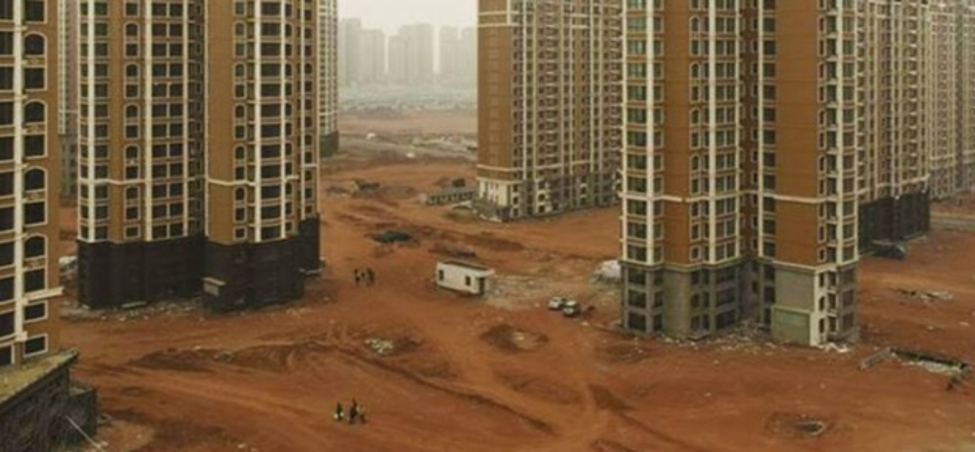
One of the most significant aspects of China’s economic opening up was the ability of private individuals to own property. Thus, as China’s economic miracle evolved, more and more folks bought property. This ran to excess as many choose to invest in more property than just their own home. This dynamic drove developers to build more and more homes, apartments, shopping centers, etc. The result has been so-called ghost cities. As of 2026 China has at least fifty “underoccupied” cities with roughly sixty-five million unoccupied apartments or houses. All of these units are owned by folks who do not collect rent or otherwise experience a return on their investments. One might think that this situation might be a benefit as China’s population could grow and already have housing available. Unfortunately, China’s population decline is such that by the end of the century its population could be as low as half of today’s 1.4 billion people. Thus millions of permanently unoccupied housing units will be a permanent drag on China’s economy and a risk for other investments.
Chinese Debt as a Risk
China has not only a national debt issue but also a personal debt problem. The personal debt size is becoming a problem for the Chinese banking system. Delinquency rates of small business loans, mortgages, and personal loans are this year approaching rates not seen in China since the Financial Crisis. China’s national debt is about $19 trillion if converted to US dollars and is about ninety percent of gross domestic product and climbing. As with the USA and other nations, China’s high national debt will translate into higher borrowing costs, slow economic growth, and make markets more volatile thus making investments risky.
Can China Sell Enough Abroad to Keep Offset Domestic Financial Problems?
China needs to find ways to ramp up domestic consumption but that is not happening and may never happen with a shrinking population. The sum total is that China is trying to work its way out of a domestic financial mess by exporting goods to a world that may well be teetering on the edge of a recession brought on by the Iran war and reduction energy and fertilizer supplies. Damage to infrastructure by the war will take up to a decade to repair so that even when the active war is over there will be ongoing harm to the global economy and therefore reduced capacity to buy goods produced in China. All in all there are intrinsic value issues overhanging Chinese companies and their stocks. China’s population will continue to shrink and nobody is going to live in all of those empty apartments. As with the US, national debt will likely keep going up as well. Consider these issues when thinking about long term investment in ADRs of Chinese stocks.