Most traders don’t blow up because they’re bad at picking stocks.
They blow up because they manage risk emotionally instead of mechanically.
You can be right about direction and still lose money.
And you can be wrong – often – and still grow an account.
The difference is risk management.
In this article, we’ll break down how professional traders think about risk, the most common mistakes retail traders make, and the tools that help remove emotion from the equation.
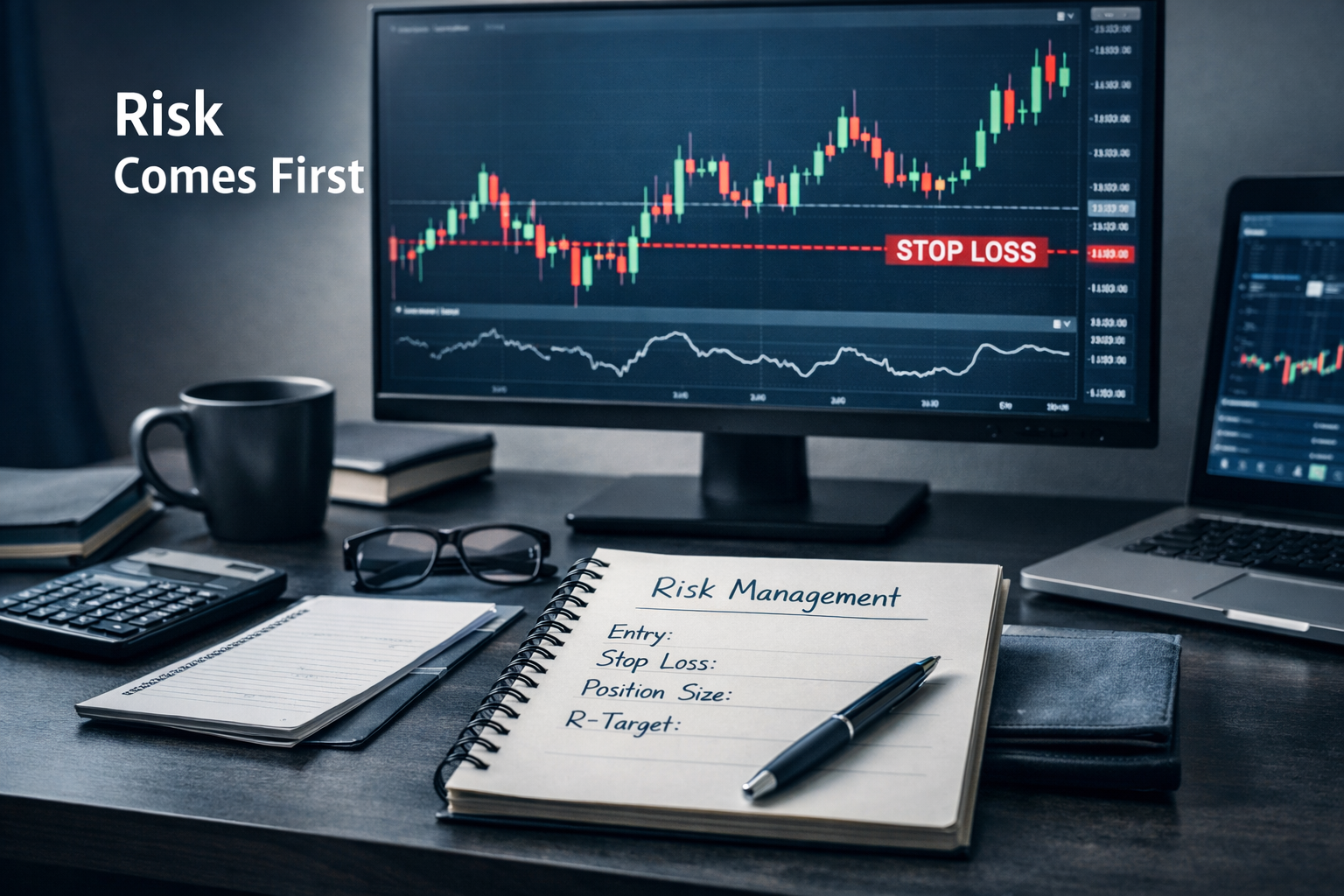
The #1 Risk Mistake Retail Traders Make
Most traders decide risk after they enter a trade.
They buy first…
Then decide where the stop “should probably go.”
Professionals do the opposite:
- Risk is defined before entry
- Position size is calculated before clicking buy
- The trade is skipped entirely if the math doesn’t work
This alone eliminates a massive percentage of bad trades.
Pros Think in Percentages, Not Dollars
Retail traders ask:
“How much money can I make on this trade?”
Pros ask:
“How much of my account am I willing to risk if I’m wrong?”
Typical professional risk per trade:
- 0.5% – 1% of account equity
- Rarely more than 2%
This keeps losing streaks survivable and emotions under control.
Why Stops Fail (And What Works Better)
Hard stops fail when they’re:
- Placed at obvious levels
- Moved emotionally
- Based on hope instead of structure
Better approaches:
- Structure-based stops
- Volatility-adjusted stops
- Rule-based exits that don’t change mid-trade
The goal isn’t avoiding losses – it’s controlling them.
The Missing Piece: Tracking Your Risk
Most traders think they’re managing risk…
But they don’t track it consistently.
Without a journal, you don’t really know:
- Your true win rate
- Your average R-multiple
- Whether your strategy actually works
This is where most traders stall – and where professionals pull away.
Tools That Make Risk Management Mechanical
The fastest way to improve risk discipline is removing decisions in the moment.
Two tools that consistently help traders do that:
- A structured trading journal to track risk, R-multiples, and mistakes
- A market structure / trend tool to define invalidation levels before entry
You don’t need more indicators.
You need fewer decisions during live trades.
Final Thought
Winning traders aren’t fearless.
They’re controlled.
Risk management isn’t exciting – but it’s what keeps you in the game long enough to win.
If you want consistency, start there.