We wrote recently about how to recognize the next big investment opportunity. In this article we would like to look at how to recognize when your previously profitable investment is going to go to the dogs. Three of the companies mentioned in the previous article, Eastman Kodak, General Motors, and IBM all offer lessons in recognizing when a sector leader is likely to stop being the same profitable investment that it has always been.
What Happens When the Technology Underlying Company Profits Becomes Obsolete?
In the late 19th century. George Eastman made photography possible for amateurs by inventing photographic film in rolls that could be exposed and then developed to print photographs. The company started with black and white film and invented color film (Kodachrome) in 1935. Eastman Kodak dominated the photographic world for a century. Its share price was one penny when the first 10,000 shares were released for $100 at the end of the 19th century. By the 1960s Kodak stock sold in the $60 range and peaked near $100 a share before the end of the 20th century. By 2013 Eastman Kodak had filed for bankruptcy protection during which time it sold a treasure trove of patents to raise cash. How did this happen and how could an investor have anticipated the demise of a formerly excellent investment?
Digital Cameras Replace Film Cameras
In regard to Kodak it is sadly ironic that the company itself first envisioned and developed digital technology for cameras starting back in the 1970s and sold the first digital camera in 1975. The bottom line reality of the transition from film to digital is that besides being convenient for the customer, digital is cheaper for consumers and less profitable than the camera film business. While Kodak was a pioneer in digital photography they were undercut in pricing by Asian competitors in a niche that wa s already less profitable than the camera film business thus spelling the eventual demise of the company’s dominance. Kodak still exists as a company but is a mere shadow of its former self.
Could An Investor Have Anticipated the Demise of Their Kodak Investment?
In retrospect it may have been difficult to see the future of one’s Kodak investment. The company was selling more camera film that ever just years before its demise. It tried to diversify into the chemical business as well as buying a pharmacy business. These efforts were sold to stock holders as rational ways to save the company but included a mix of poor planning and execution leading to good money being thrown after bad. An investor who did their homework looking for intrinsic stock value as it became evident what the cost and profit differentials of film versus digital were would have recognized the problem and would have cashed out before the demise of the company and their investment.
When IBM Was No Longer the Top Computer Company Investment
For many years from the 1950s to the early 1980s it made sense to buy IBM stock and never sell it. IBM was a cash cow with its lock on the main frame computer market, attention to customer service and maintenance of long-term business relationships. The company had (and still has) a strong research arm currently holding more than 150,000 patents of which more than 60,000 are still active. At the end of the 1970s IBM recognized the possibility of personal computers and produced one. However, the company did not appreciate the demand for this product or how much this new technology would change the computing world. Thus, the market niche that IBM could have dominated came to be populated by Apple, Commodore, Edson and others with a lot of price competition and IBM lost out in this niche as its share of the PC market fell from 80% at the start of the 1980s to 20% by 1992. IBM used Microsoft to provide its PC operating system but fought with the new company over a newer OS and allowed Microsoft to develop and market its Windows system to other companies. Similarly IBM did not pay for proprietary rights to the Intel chip in their PCs allowing Intel to sell to other computer makers. These two business mistakes were damaging for IBM and helped lead to their loss of prominence in the computer world while main frame computers became less important and the company lost what should have been continued dominance in the new PC niche. While Eastman Kodak’s demise can be blamed on a totally new technology, the loss of leadership by IBM can be blamed on inept handling of the challenges posed by personal computing. Thus, today IBM has a market cap of about 250 Billion while “upstarts” like Apple and Microsoft have market caps in the trillions. It would have been difficult at the time to anticipate the IBM partial fall from grace but anyone who saw the rush to personal computing over the 1980s and 1990s could have done their intrinsic value analysis and moved their capital to today’s tech giants while keeping perhaps a modest sum invested in IBM.
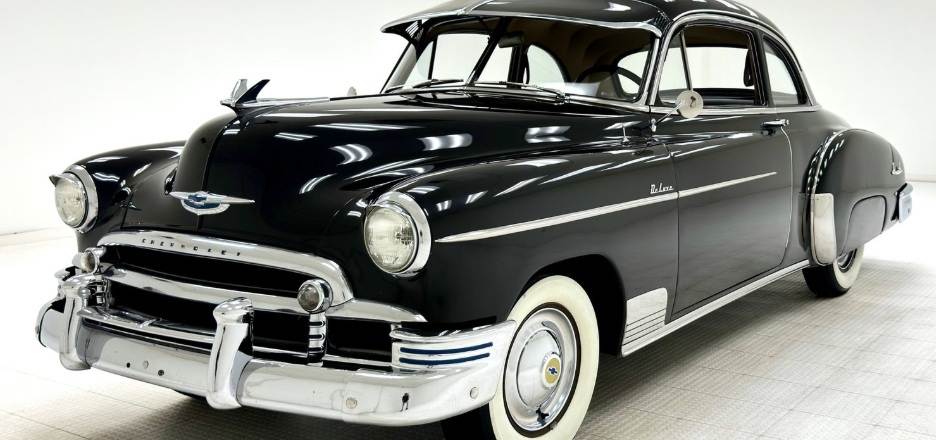
Chevrolet Impala from the Heyday of GM
The Fall From Grace of the World’s Leading Automaker
Ford Motor Company invented the automobile assembly line and produced the Model A and Model T cars but it was General Motors that was the world’s greatest automaker for 77 years from 1931 to 2008 when Toyota became number one. Not only did GM lose first place in auto sales to Toyota but the company also went through bankruptcy and reemerged as a reorganized company. General Motors created the model for modern car sales in its early days. Unlike Ford which produced the same model year after year, GM made several models from cheap to moderately priced to expensive and updated models each year thus creating a used car market and driving consumers to continually buy new cars. The company was innovative with multiple new technologies and had management that planned for the long term. Over the years this approach gave way to short-term thinking and led to GM missing out on the market for exceptionally well-built cars that lasted and retained their value which Toyota excelled at. This lack of foresight combined with the Great Recession led to the demise of the old GM and reorganization into a new company which survives today among the top tier of automakers but certainly no longer number one. GM is a textbook case of a company which showed signs of failure and decreasing intrinsic value running up to its demise. The bottom line for recognizing when a long-term winner will turn into a loser is paying attention to forward looking cash flow, how technology and management that has led to profit will likely or likely not continue into the distant future.
FREE MASTERCLASS: 3 Secrets to Take Control of Your Financial Future!